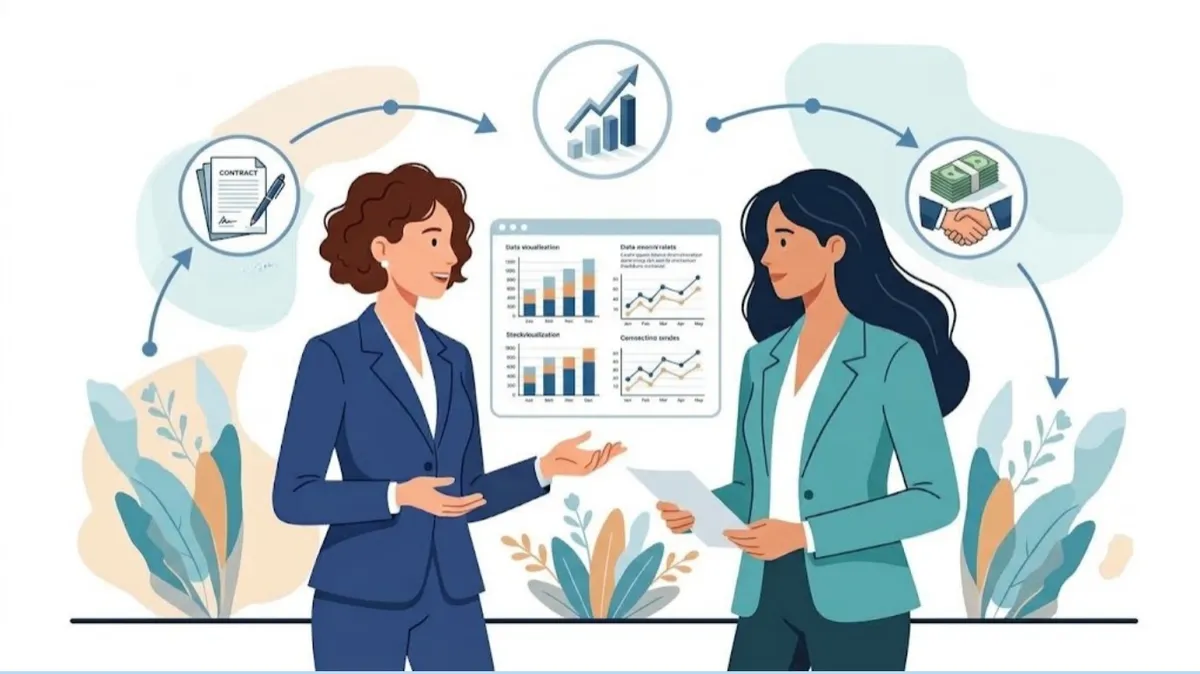
How Notaries Can Build Referral Relationships With Financial Planners
How Notaries Can Build Referral Relationships With Financial Planners
When notaries think about potential referral partners, the same industries tend to come up first: title companies, real estate professionals, attorneys, and signing services.
But there may be another professional relationship worth exploring: financial planners.
I recently sat down with Ali Elsayed, a Certified Financial Planner based in Tampa, to talk about his work with retirement and estate planning clients. Our conversation covered everything from retirement goals and blended families to trusts, powers of attorney, and the role notarization can play in the estate planning process.
For notaries, however, one part of the conversation stood out.
Ali explained that financial planners who work with estate planning clients may have opportunities to develop ongoing relationships with notaries. Yet despite working in the industry himself, he said notaries rarely approach him about partnering.
That presents an interesting question for notary business owners: Are you marketing to the professionals who already serve clients who may need you?
Financial Planning Goes Beyond Investments
Ali's approach to financial planning starts with understanding the person behind the numbers.
His career began after studying finance and eventually working with Franklin Templeton and Morgan Stanley. Through that experience, he said his understanding of financial planning expanded beyond simply recommending investments.
Financial planning, as Ali described it, involves learning about the client's family, goals, circumstances, and what they are ultimately trying to achieve. Pasted text
That perspective eventually led him toward a relationship-based practice.
Rather than focusing only on investment products, Ali works with clients across areas such as retirement planning, income planning, education planning, insurance planning, and estate planning. Pasted text
For notaries, that broader scope matters because some of those planning conversations eventually result in documents that require additional professionals.
Estate Planning Creates Natural Professional Connections
Ali primarily focuses on retirement planning, with much of his clientele consisting of people age 55 and older.
One of the most common questions he hears is simple: "Can I retire?"
But answering that question isn't necessarily as simple as looking at a person's savings balance.
A client's goals, family responsibilities, desired retirement age, income needs, and other circumstances can all affect the conversation. Ali emphasized that his role is to understand what the client wants and determine whether the numbers support those goals. Pasted text
Estate planning can become another piece of that larger financial picture.
Ali explained that his firm provides certain estate planning services and brings in estate planning or elder care attorneys when situations become more complex. Pasted text
That creates an ecosystem of professionals around one client.
Depending on the situation, that ecosystem may include a financial planner, attorney, tax professional, insurance professional, and notary.
For a notary trying to build recurring professional relationships, understanding that ecosystem can be much more valuable than simply waiting for an individual client to search for a notary.
Blended Families Can Make Estate Planning More Complex
Ali gave an example involving a couple in a second marriage.
Both spouses had children from previous relationships, and one concern involved what could happen to assets if one spouse passed away and the surviving spouse later remarried.
According to Ali, situations like these can move beyond the scope of simpler planning and require an estate planning attorney who can address the appropriate trust language and structure. Pasted text
The example highlights something important for notaries.
We may be present at the end of a process involving a trust, power of attorney, or another estate planning document, but that does not mean we're responsible for advising the signer about what the document should say.
As a notary, I am very aware of staying within my role. My job is not to decide whether someone's estate plan is fair, whether I agree with their decisions, or what legal provisions they should include.
Those questions belong with the appropriate professionals.
Estate Planning Can Get Very Personal
Ali also shared how personal these conversations can become.
He described working with clients who wanted to treat children differently in their estate plans or change beneficiaries because family relationships had changed.
From Ali's perspective, the job requires listening to what the client wants without making the conversation about his personal opinion. Pasted text
I can relate to that from the notary side.
Sometimes we encounter documents connected to divorce, family disagreements, estate planning, or other very personal situations. You may learn details about someone's life simply because you're involved in the signing.
But the notary's role remains limited.
I don't need to insert myself into the family dynamics behind a document. I need to perform my role appropriately and remain professional.
That's an important boundary, especially when you begin marketing your services to professionals who regularly handle sensitive matters.
What Estate Planning Documents May Need a Notary?
Because many people in my audience are notaries, I asked Ali which types of documents he commonly sees notarized as part of the estate planning work handled through his firm.
He identified documents including:
Trusts
Certifications of trust
Powers of attorney
Healthcare directives
Certain property-related documents associated with putting property into a trust
Ali noted that these were documents he encounters within his firm's estate planning process. Pasted text
Notaries should remember that document requirements can vary depending on the document and applicable state law. This list should not be treated as a universal statement that every document of these types always requires notarization.
Instead, it shows why estate planning professionals can naturally encounter situations where access to a dependable notary is useful.
Why Financial Planners Can Be Valuable Referral Partners for Notaries
This was one of the most useful parts of our conversation for notaries who are trying to grow their businesses.
Ali encouraged notaries to explore the financial planning community in their local market.
As more financial planners become involved in estate planning conversations, he sees an opportunity for planners and notaries to develop mutually useful professional relationships.
In his view, notaries aren't competitors to financial planners. They can complement the services planners provide. Pasted text
Think about what that could mean from a business development perspective.
Instead of finding one client who needs one notarization, you may be able to build a relationship with a professional who repeatedly serves people who need documents notarized.
That's a very different marketing strategy.
Don't Limit Your Outreach to the Obvious Businesses
Ali also suggested that notaries research firms, contact them directly, and look for opportunities to participate in workshops or other educational events where their services could complement what the firm is already providing. Pasted text
That doesn't mean sending the same generic sales email to hundreds of financial planners.
Start by understanding the business.
Do they work with retirees?
Do they discuss estate planning?
Do they hold workshops?
Do they collaborate with estate planning attorneys?
Would mobile or Remote Online Notarization make the process easier for their clients?
The more you understand how the firm works, the easier it becomes to explain where your service could actually help.
"The Market Is Saturated" Doesn't Mean Everyone Is Marketing
I asked Ali a question I hear constantly in the notary industry.
Everyone says the market is saturated, so had other notaries been marketing their services to him?
His answer was no.
Aside from meeting a notary through one of his workshops, Ali said he had never received a call from a local notary asking whether they could work together. Pasted text
That is worth paying attention to.
We can spend a lot of time worrying about how many other notaries are in our area without asking a more useful question:
How many of those notaries are actually building relationships with the businesses that could refer work to them?
Competition existing in your market doesn't automatically mean every opportunity has already been taken.
As Ali put it, you have to go find the business instead of expecting the business to find you. Pasted text
What Makes a Notary Valuable to a Professional Partner?
A financial planner or estate planning professional isn't simply looking for another name in a directory.
They're potentially introducing that person to a client.
That means reliability matters.
If you're building relationships with professionals, think about what would make their experience easier.
Can you communicate clearly?
Are you responsive?
Can you accommodate mobile appointments when appropriate?
If you're authorized to perform RON in your state, can remote service solve a logistical problem for their client?
Do you understand where your responsibilities end and when a client needs to go back to their attorney or financial professional?
Professional referral relationships depend on trust.
Your goal isn't simply to convince someone to send you a signing. It's to become someone they feel comfortable bringing into their client experience.
Financial Planning Is Relationship Driven Too
Another interesting takeaway from my conversation with Ali was how much his own industry has changed.
He described modern financial planning as increasingly holistic and relationship driven. Rather than only managing investments, planners may become involved in many parts of a household's financial life.
Ali shared an example of helping parents think through how assets could support a child after the parents' deaths. Their concern wasn't simply how much money the child would inherit. They wanted to understand how those assets could be distributed sustainably over the child's lifetime. Pasted text
Those deeper planning relationships are another reason it makes sense for notaries to think beyond one-time transactions.
The professionals serving these families may remain involved with them for years.
Estate Plans Can Change as Families Change
Another theme throughout our conversation was that financial and estate plans aren't necessarily static.
Families change. Relationships change. A spouse may pass away. Beneficiary preferences may change. New concerns can emerge.
Ali described financial planning as dynamic because today's circumstances may not be tomorrow's circumstances. Pasted text
He also explained that his firm's trust process generally involves three stages: drafting, execution, and funding. In his practice, that process commonly involves several meetings over approximately four to six weeks, although individual circumstances and complexity vary. Pasted text
For notaries, the execution stage is where our services may enter the picture.
Understanding where you fit within the larger process can help you communicate much more effectively when networking with estate planning and financial professionals.
Start Building Relationships Before You Need the Work
One of the biggest lessons from this interview has very little to do with financial planning itself.
It's about how we approach business development as notaries.
It's easy to sign up for platforms, create social media pages, and wait for someone to need a notary.
Building professional relationships requires a different approach.
Research the financial planners in your market. Look at the services they provide. Find out whether they work with estate planning clients. Introduce yourself professionally and explain how your notary services could support their clients.
You don't need every financial planner in your area to work with you.
A few strong professional relationships can be more valuable than repeatedly chasing individual appointments.
And if you're worried that every potential referral partner has already been approached by another notary, remember what Ali told me.
Despite working in a field where notarized estate planning documents can come across his desk, he had essentially never had a notary directly approach him about forming that professional relationship. Pasted text
Sometimes the opportunity isn't hidden.
Nobody has asked yet.
